 Panacea Bio Chem
Feature · Receptor Pharmacology
Panacea Bio Chem
Feature · Receptor Pharmacology
Panacea Bio Chem
Feature · Receptor Pharmacology
Panacea Bio Chem
Feature · Receptor Pharmacology
A receptor is not a simple on/off switch. Turn it on the right way and it can drive the effect you want while barely touching the pathway that causes the trouble. That is biased agonism — and it is reshaping how peptide medicines are designed.
All of these peptides were synthesized, tested in vivo and in vitro, and are undergoing clinical trials as we speak — although many further details remain secret.
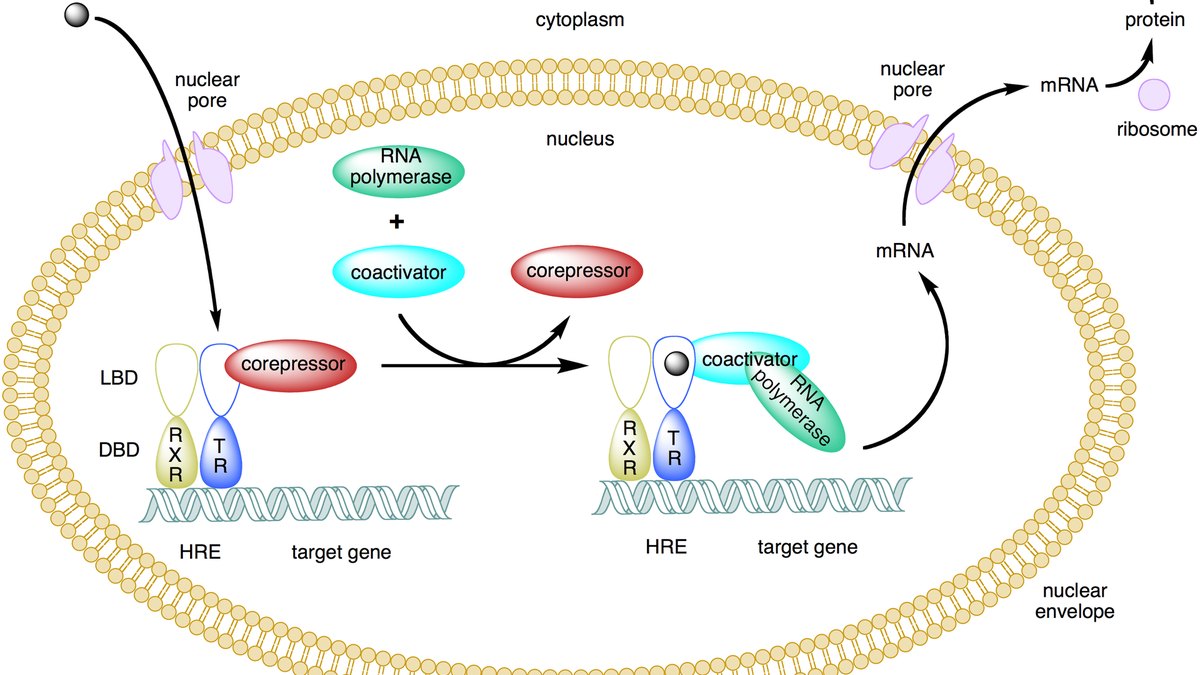
When a drug activates a receptor, the receptor can talk to the cell through more than one channel at once. Biased agonism (also called functional or signalling selectivity) means steering that conversation toward the pathway that carries the benefit and away from the one that carries the side effects. For peptide medicines — where a single sequence change can tilt the balance — this turns "how much drug?" into the sharper question "which signal?". Panacea Bio Chem researches signalling-selective peptide design under the working name Septagonist.
Most peptide and hormone drugs work by fitting into a receptor — a protein antenna on the surface of a cell. The largest family of these are the G-protein-coupled receptors (GPCRs), the target of a large share of all medicines. For decades we pictured them as a light switch: the drug flips the receptor on, and everything downstream lights up together.
Reality is richer. A switched-on GPCR can send its message down at least two different wires. One runs through G proteins; the other runs through a shuttle protein called β-arrestin3. Both start at the same receptor, but they set off different chains of events inside the cell — different timing, different destinations, different consequences. A drug that pushes the receptor toward one of those wires more than the other is a biased agonist. The receptor is on either way; what changes is which signal gets sent.
Think of the receptor as a switchboard rather than a switch. An ordinary agonist rings every line. A biased agonist rings the line you actually want answered.
Here is why researchers care. At many receptors the wanted effect and the unwanted effect ride different pathways. If a single pathway carries the benefit and another carries the burden, then activating them together — as a classic agonist does — forces a compromise: more benefit always drags along more side effect.
Signalling selectivity breaks that link. In principle a biased ligand can dial up the beneficial branch while leaving the troublesome branch quiet — widening the therapeutic window without simply lowering the dose. The idea has been sharpened over the last decade into a quantitative discipline, with formal ways to measure and compare how strongly a ligand prefers one pathway12.
The most-cited worked example comes from the μ-opioid receptor, where G-protein signalling was associated with analgesia and β-arrestin signalling with some of the classic burdens. That reasoning drove the design of G-protein-favouring opioid agonists such as oliceridine (TRV130)4 — a real-world case that also taught the field humility: bias is subtle, context-dependent, and must be characterised carefully rather than assumed. Interpreting it correctly is itself an active research question2.
| Concept | Classic ("balanced") agonist | Biased agonist |
|---|---|---|
| Receptor state | On | On |
| Pathways engaged | All, roughly together | Favours one (e.g. G-protein or β-arrestin) |
| Design goal | Potency & affinity | Pathway selectivity — the right signal |
| Therapeutic aim | Effect vs dose trade-off | Widen the window: benefit up, burden down |
| What tunes it | How tightly it binds | How the bound receptor is shaped |
What makes this a peptide story in particular: peptides are sequences, and a receptor's pathway preference is exquisitely sensitive to the exact shape a ligand stabilises. Swap a residue, cyclise a backbone, adjust a side chain — and the same receptor can be nudged toward a different downstream wire. Peptides give a designer a fine, addressable set of dials for exactly this1.
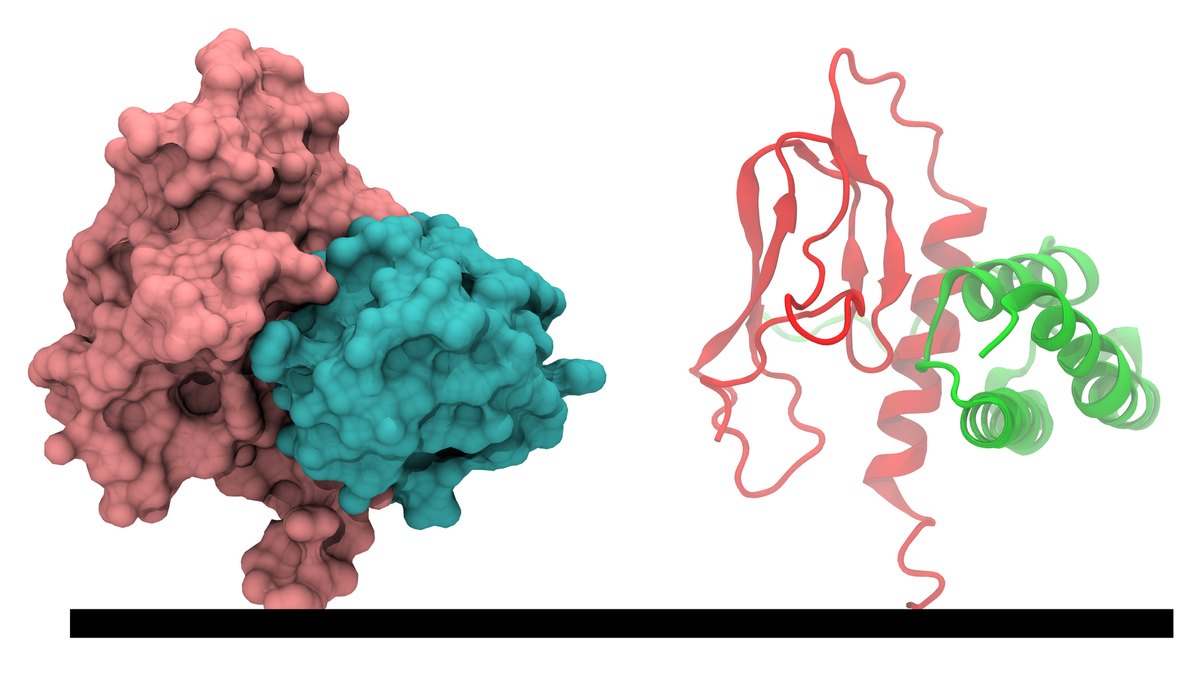
Panacea Bio Chem treats an amino-acid chain as something that can be tuned, not merely bound. Its ongoing research direction — carried under the working name Septagonist — explores how the geometry and formulation of a designed peptide agonist bias which downstream pathway a receptor favours. The premise is simple to state and hard to do: if the sequence sets the shape, and the shape sets the signal, then the signal is a design target.
That work sits inside a wider Panacea toolkit. The Dicoias formulation space — designing peptides as mathematics → reduces a candidate to a vector across physical, electronic and bio-interface axes, so a design can be reasoned about before it is made. And because a pathway preference lives in a conformation, keeping that conformation intact from synthesis through drying to reconstitution matters — the province of Panacea's gentle, structure-preserving processing such as Cryolapse gentle lyophilization →. The exact sequences, rules and parameters behind Septagonist are proprietary to Panacea Bio Chem and held by Bogdan Dicoias; the direction is public, the recipe is not.
Signalling-selective peptide design is most valuable exactly where today's agonists force a painful trade-off. A few frontiers where the upside is largest:
Each is a place where "which signal?" beats "how much?" — and each is a candidate direction for future Panacea research and trials.
What is biased agonism?
It is when a drug switches a receptor on but steers it toward one downstream pathway rather than activating all of them equally. At a GPCR the classic branches are G-protein and β-arrestin signalling; a biased ligand favours one over the other.
Why does signalling selectivity make better peptide drugs?
When the wanted effect and the unwanted effect ride different pathways, a signalling-selective peptide can raise the beneficial branch while quieting the other — widening the therapeutic window instead of just lowering the dose.
What is Septagonist?
Septagonist is Panacea Bio Chem's working name for its research direction in signalling-selective peptide design — shaping an agonist so a receptor favours a chosen downstream pathway. It is exploratory work led by Bogdan Dicoias; the specific sequences and methods are proprietary.
PubMed has no record matching "biased agonism" OR "signalling selectivity" as an indexed phrase — checked 2026-09-27 by Panacea Bio Chem.
The Panacea Technology Universe
Proprietary Panacea Bio Chem Ltd technologies, invented by Bogdan Dicoias — what each one does, and why it leads its class.
 Lyoprester®The only dual-chamber cartridge that is autoreconstitution-enabled, vacuum-sealed and argon-fillback.lyoprester.com ↗
 P-EARLs™Panacea-Engineered Aseptic Reconstitution Liquid(s) — each tuned to the peptide it wakes.p-earls.com ↗
 Peptourbillon™The layered peptide formulation architecture — single- or multi-layer, never a blend.peptourbillon.com ↗
 RF Tunnel™The RF-formed central channel through the cake.rftunnel.com ↗
 TgShift™Raises the cake’s glass-transition temperature with RF — instead of chilling below it.tgshift.com ↗
 Cryolapse™Cryogenic pressure collapse under S3Pulse™ control — vapour redistributed through the whole cake, not its surface, impeding crust formation.cryolapse.com ↗
 LyoLevit™The cake levitates and spins in high orbit — driven by ultrasound and RF.lyolevit.com ↗
 Lyochrysalis™The integrated chamber housing the whole drying stack.lyochrysalis.com ↗
 S3Pulse™The control brain for every piece of Panacea hardware.s3pulse.com ↗
 Liquiprester™The single-liquid cartridge engineered so multiple peptide APIs coexist in one shared vehicle.liquiprester.com ↗
 Syntheseract™Continuous-flow peptide synthesis in a special, very fast and economical way.syntheseract.com ↗
 CFSPPS™Continuous-flow solid-phase peptide synthesis, written as its own category.cfspps.com ↗
 OxyDeplete™Degassing plus no-headspace doctrine — the oxygen-starved seal.oxydeplete.com ↗
 ArgonLock™The final inert-atmosphere lock under argon.argonlock.com ↗
 RedoxVault™Separation, not merely suppression — redox isolation in lipid micro-reservoirs.redoxvault.com ↗
 PleniDose™The shared filling gantry — one machine filling both the dual-chamber Lyoprester and the liquid Liquiprester.plenidose.com ↗
 IncreSure™The dose-metrology layer — verified API per pen increment.incresure.com ↗
 ElimiVoid™Front-void elimination without touching the metered dose.elimivoid.com ↗
 Cryoviscous™The characterised cold, high-viscosity, low-mobility conditioning state.cryoviscous.com ↗
 Vana Machine™Vacuum Assisted Needle Accessory — vacuum conditioning and plunger-locking for the cartridge.
 EZnject™The disposable auto-injector pen built around the Lyoprester.panaceaeznject.com ↗
 Dicoias ΨThe computed-chemistry advisory — every substance reduced to a vector across physical, electronic and formulation space.dcppsi.com ↗
 SealoPrester™Aseptic Cartridge Closure System — Seal o’ Precision + Sterility.sealoprester.com ↗
 Peptidic LiquidThe peptide formulation in solution — the active plus its buffers, cryoprotectants, lyoprotectants and scaffolders.peptidicliquid.com ↗
 DiastolVAC™Biomimetic diastolic vacuum control — the pneumatic circulatory system of the machine: pumps, valves and sensors as one ensemble.diastolvac.com ↗
 KineticON™Motion Integrity Architecture — the motion-control layer that lets the machine know what happened on every axis move.kineticon.org ↗
Publications indexed in PubMed in the last 30 days for "biased agonism" OR "signalling selectivity" — refreshed weekly.